


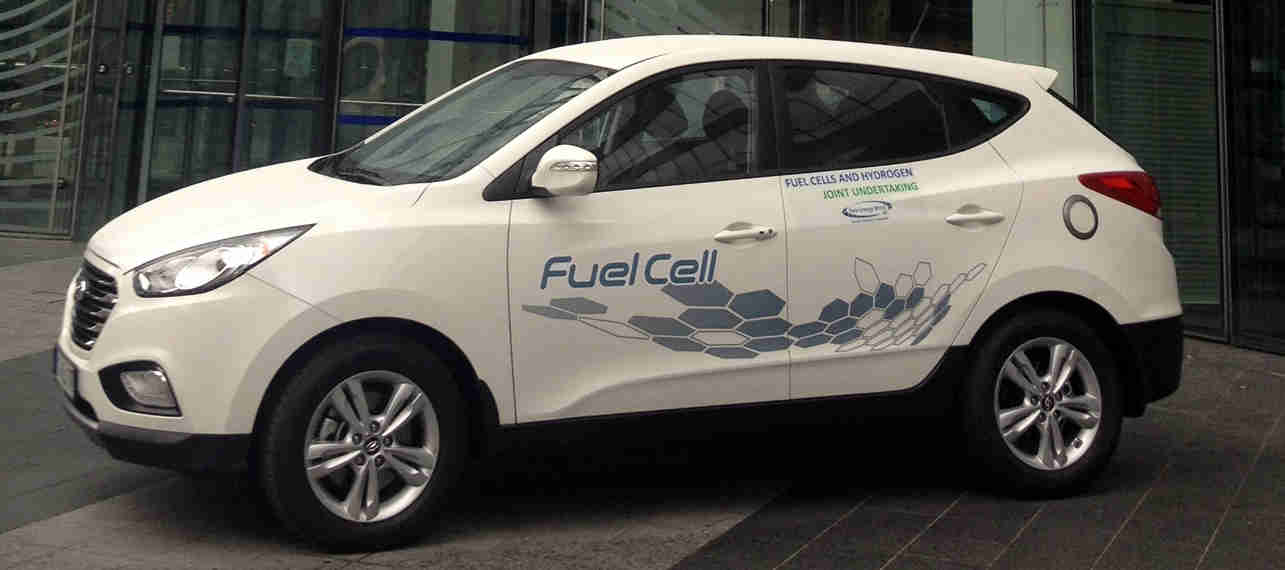
The stand – presented by the European (and rather awkwardly named) Fuel Cells and Hydrogen Joint Undertaking (FCH-JU) – enabled me to examine for the first time a hydrogen-powered vehicle designed for normal, everyday use. The car in question was a Hyundai ix35 FCEV, a mini 4×4 of the type that is increasingly popular with Europe’s ageing car-buying public.
It is also of particular interest to anyone concerned with air pollution and living in Europe’s traffic-bound cities. The ix35 FCEV (fuel-cell electric vehicle) looks the same as a normal small 4×4, and claims similar levels of performance and convenience in use. The giveaways are the lack of an exhaust pipe and a raised floor in the boot that limits luggage space slightly, which I assumed to be due to the size of the hydrogen tanks.
So why are we not driving these cars now? “The issues are manufacturing cost and refuelling,” says Bert De Colvenaer, executive director of the Brussels-based FCH-JU. “At the moment these vehicles are practically hand-made, and cannot be produced at a price level the market would accept. And of course there is the question of hydrogen infrastructures.”
“We are funding some infrastructure projects,” he continues, “although building such networks requires cooperation from both public and private bodies. Once such facilities are available we expect market costs for these vehicles, hopefully with government encouragement, to drop rapidly.”
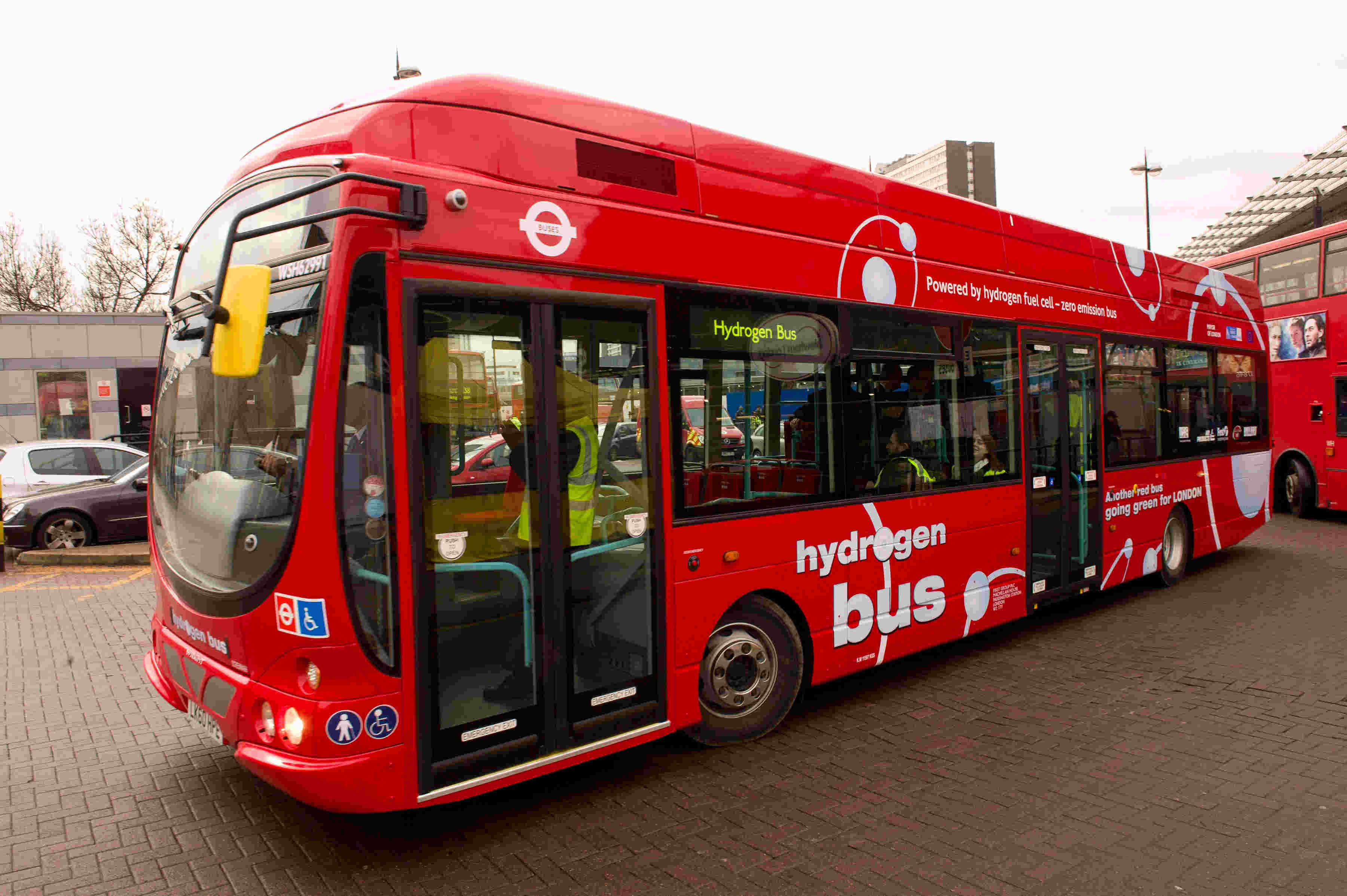
My own belief is that market take-up of such vehicles is likely to be slower than the fuel-cell evangelists would like. However there is little doubt that they solve one of the major drawbacks of the electric-only vehicle – battery life – offering a vehicle range that can be considered as useable in Australia’s outback as it is in Europe’s crowded centre.
Honda has had its own pilot project with FCEVs in California for some years. There the company focused on leasing rather than purchase for reasons of manufacturing cost, however there appear to be no complaints about the vehicles from customers who have been using them every day.
So I have little doubt that we will start to see more of them on the road. If the FCH-JU has its way – and the public-private group is backed by nearly € 1 billion of funding from its members – that day will come sooner rather than later.
© Philip Hunt, 2014.
Video
Can the new EU 2030 climate and energy proposals drive European innovation? And what can be done to ensure this opportunity becomes European reality?

More info at http://www.fch-ju.eu/
European Hydrogen Association http://www.h2euro.org/