


Mark Bibby Jackson
The Covid-19 pandemic has changed the way that we view travel. Research carried out by Booking.com in March this year indicated that 73% of Americans feel that sustainable travel is vital. Reports indicate a similar attitude on this side of the Atlantic, with 77% of UK citizens saying they would consider the environment when planning future travel.
According to the World Travel and Tourism Council (June 2021), “There has been growing awareness around climate, environmental and social issues … It is increasingly clear that we should respond with the same urgency and vigour to the climate crisis as we are to COVID-19, not only on ethical grounds, but also because the travellers of tomorrow will demand it.”
The message is clear. Covid is not the only crisis in town. Any recovery plan should account for the climate crisis, which, if anything, will have even greater consequences for humankind and the planet than Covid.
 Travellers in the 2020s want their journeys to have less environmental impact than previous generations. Avoiding single-use plastics, opting for towels and bed linen not to be cleaned every day, and turning off the air conditioning are measures that many travellers are familiar with and now implement.
According to Booking.com’s survey, most (61%) would choose accommodation that has implemented sustainable practices, and would use environmentally-friendly travel options while at their destination (71%). Just over a third (36%) shop at local stores to support the local economy. Quite simply, travellers want to do the right thing.
Deckchairs on the Titanic?
However, implementing green practices while you are on holiday is a bit like “changing the deckchairs on the Titanic,” according to Professor Geoffrey Lipman, who is promoting the concept of climate-friendly travel through the SUNx Malta programme.
The underlying principle of climate-friendly travel is that it should be both green and clean. Global warming or climate change is this great big iceberg that we are sailing towards, and unless we do something about it, the worthy measures that you implement whilst on your travels become pretty irrelevant – like changing the deckchairs on the Titanic.
What benefit is there to small island resorts if they implement green, sustainable measures, eliminating the use of single-use plastic, using renewable energy and employing a local workforce, if in 10 to 20 years’ time their shorelines are underwater due to rising sea levels.
Transport, predominantly aviation, is responsible for roughly half of the global tourism industry’s carbon footprint. Aircraft contributed 915 million tonnes of CO2 emissions in 2019, estimated to be the equivalent of 3% of global CO2 emissions. Any meaningful attempt to reduce this level of pollution needs to take into account the carbon impact of how we travel to destinations, as well as what we do once there.
Plane or train?
Before the pandemic, campaigns such as Flight Shame or Flygskam, or Extinction Rebellion highlighted the climate consequences of our obsession with flights. An alternative is to take a simpler form of transport, be it train, coach or even cycling when possible. Opting to take the train to your destination is generally cleaner than flying. This makes sense for travelling within the UK or around Europe, but doesn’t get you very far if you are planning a fortnight’s break in the Maldives or visiting relatives in New Zealand.
Covid has demonstrated just how many small island states—such as the Maldives, Seychelles and those in the Caribbean—are reliant upon international flights for their economic stability; the same international flights that are contributing to putting them most at risk from climate change. But because they are heavily dependent upon tourism revenue, simply taking these destinations off your holiday bucket list will create another problem for those states, that of income.
Clearly, some destinations need international flights. The question then is how to reduce their environmental impact.
Cleaner flights?
Cleaning up aviation has been something the industry has been working on for a number of years, with a reduction in CO2 emissions per kilometre of just over 50% since 1990. Current aircraft are much cleaner than those of a few decades ago – one of the reasons why upgrading of fleets is so important. But they still are not clean.
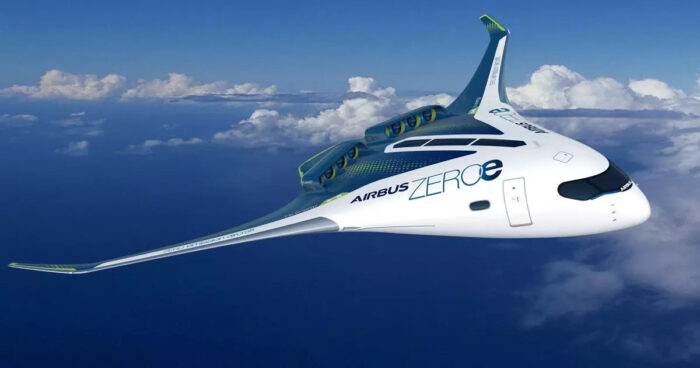
Last year Airbus announced plans for the first hydrogen-powered aircraft. However these planes will not take off until 2035 at the earliest, and even then only on flights up to 2000 miles. Extensive research has also gone into producing sustainable aviation fuels from industrial waste, however the results remain more expensive than conventional aviation fuel.
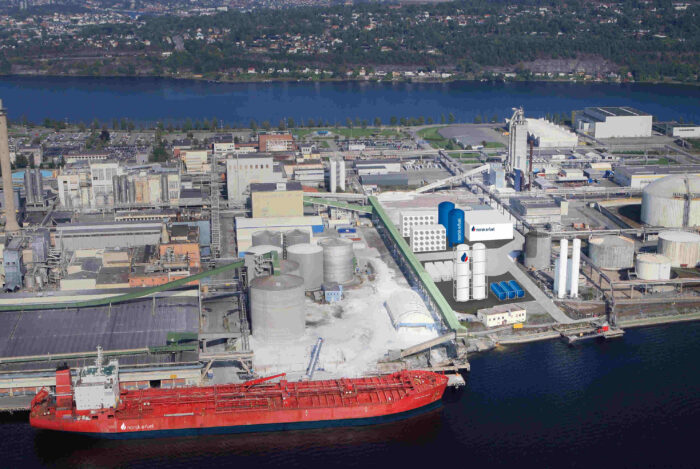 Recently, Norsk e-Fuel announced the launch of a commercial plant to create hydrogen-based renewable aviation fuel, which should provide 100 million litres of renewable fuel by 2026. This is an encouraging step, but would only account for 250,000 tonnes of CO2 emissions compared with the 68.14 million tonnes of CO2 equivalent generated by the major European airlines in 2019 (according to data from the European Commission).
Offset your flight?
While decisions such as imposing carbon taxes on aviation fuel are ones that have to be made at governmental level, there is something that we can all do when booking our next flight – offset.
There is much debate about the relative value of offsetting the carbon footprint of your flight, or holiday. Some accuse it of being greenwash, but if the reality is that reducing the ‘real’ carbon emissions of our travel is some way off, then the next best thing is to reduce the ‘net’ carbon emissions through offsetting.
Of course, there are offsets and offsets. Under some schemes you might find yourself paying for a tree that someone else has already paid for. It is far better for your offsets to contribute to a rewilding project that supports the biodiversity of an area, rather than to planting trees that might then be cut down after a number of years as part of a forestry project.
If all this sounds too confusing, then the good thing is that there is a gold standard for carbon offsets, this one – Gold Standard. Alternatively, you can choose to offset your travel with Trees4Travel, which carefully selects the organisations it works with, and charges you £3 per tree as your carbon-offset contribution. For instance, if you were to take the train from London to Paris and spend three nights in the French capital, you can offset your travel for the cost of one tree, or £3.
Similarly Tomorrow’s Air has partnered with leading carbon-capture company Climeworks, which is also part of the consortium behind the hydrogen-based aviation fuel plant mentioned above, to allow individuals to make a monthly subscription from as low as $10 to help fund carbon capture.
Learn to enjoy your travel!
 Fundamentally, for me climate-friendly travel is about an attitudinal shift in the way we view our travel. As a travel writer I am someone who sees the benefits of travel as well as its environmental and climate consequences.
I suggest that when you are planning your next trip, whether domestic or international, you consider this. I am a massive believer in slow travel. Not only does this minimise your carbon footprint by reducing the number of flights you take around a destination, but it also maximises the positive contribution you can make to your host community.
By spending more time to get to know your hosts – their culture, food and tradition – you will find your own travel experience much more rewarding. After all, this is why we go on holiday in the first place.
By making your travel both cleaner and greener, not only will you be doing your bit to support local communities and redress climate change, you will also be enriching your own travel experience. Now isn’t that something to build towards after the longest of long winters.
Mark Bibby Jackson

Mark Bibby Jackson is passionate about visiting new places and people. He is founder and group editor of the websites Travel Begins at 40 and London Begins at 40, as well as the award-winning author of three thrillers set in Cambodia. He is the former editor of AsiaLIFE Cambodia, ASEAN Forum and Horizon Thailand magazines.
https://www.travelbeginsat40.com/
https://www.markbibbyjackson.co.uk/
Facebook / Instagram: @TravelBeginsat40
References
https://sustainabletravel.org/issues/carbon-footprint-tourism/
https://www.travelbeginsat40.com/news/airbus-developing-hydrogen-zero-emission-planes/
https://www.reuters.com/article/us-norway-hydrogen-idUSKBN23G18D
